
Why Two Accounts at the Same Level Can Perform Completely Differently
Clash Royale progression is spread across several measurements, so one headline level cannot describe everything an account can do. Supercell explains that King Tower Level affects Crown Tower strength and the maximum level of Tower Troops, while individual cards have their own upgrade levels. The game also tracks broader collection progress separately.
This distinction matters when players compare profiles, including Clash Royale accounts for sale on third-party marketplaces. Two profiles may display the same King Tower Level, yet their card collections, Evolutions, deck development, and upgrade distribution can differ substantially. A single number provides useful context, but it does not tell the complete story.

Why the Headline Level Still Matters
It is easy to see why players focus on account level first. It provides a quick reference point. Supercell notes that King Tower Level directly influences Crown Tower power and limits how far Tower Troops can be upgraded. Trophy Road also uses level gates that can prevent players from entering certain Arenas until their King Tower reaches the required level.
That makes the level meaningful. If two profiles are several levels apart, the difference can reveal something important about their progression. Problems arise when the number is treated as a complete measure of strength.
The current progression system makes this limitation particularly clear. Following its 2026 progression changes, Supercell describes Collection Level as the combined total of card levels, with additional progress coming from Evolutions and Hero forms. King Tower Level, meanwhile, depends on reaching requirements involving upgraded cards. These measurements overlap, but they describe different parts of progression.
Same Level, Different Upgrade Patterns
Consider two accounts with the same King Tower Level. One player may have concentrated resources on a relatively small group of cards used regularly. Another may have spread upgrades more evenly across a large collection.
Those profiles can feel very different in actual matches. Supercell states that card levels are not capped on Trophy Road, and matchmaking there does not consider the cards in a player’s deck or their levels. Instead, matchmaking primarily uses Trophy count. This means the development of the active battle deck can matter greatly when similarly ranked players meet.
This is where the idea of a “rushed” account becomes useful. It is an informal gaming term rather than an official Clash Royale classification. Generally, it describes progression where headline advancement has moved faster than the development of important underlying assets.
An account might therefore satisfy requirements for a certain tower level while still having uneven card development. Another profile at that same level could have several well-developed deck options. The number at the top may match, while the practical choices available to each player do not.
What Should You Check Beyond One Number?
A better comparison starts by treating an account as a collection of related data points. Instead of asking only, “What level is it?”, look at how its different progression fields fit together.
- Check the levels of cards used in the main decks.
- Look at how upgrades are distributed across the wider collection.
- Review the available Evolutions and Hero forms.
- Compare King Tower Level with overall Collection Level.
- Consider Trophy Road progress alongside actual deck development.
These fields describe different dimensions of the same profile. Supercell says every card contributes to Collection Level, while unlocking an Evolution or Hero adds further progress. That means two players can arrive at superficially similar milestones through different combinations of upgrades.
More Progress Does Not Always Mean Better Deck Fit
There is another complication. Raw progression does not automatically create a coherent battle deck.
A player could have many upgraded cards without having the particular combination needed for a preferred strategy. Another account might have fewer highly developed options overall but have a closely matched group of cards that works well together.
Card Evolutions add another variable. Supercell introduced Evolutions as enhanced forms that give existing cards additional abilities. Their presence can therefore distinguish two collections even when their headline progression figures appear similar.
This is why evaluating an account requires context. A profile designed around one established deck may suit one player and feel restrictive to another who wants to experiment with several archetypes.
Why This Resembles Debugging Software
The same principle appears in software systems. One field rarely proves that an entire dataset is healthy. Gaming software provides a practical example because multiple performance variables, including background resource use, frame rate, latency, and network conditions, can affect how smoothly a game runs. Looking at these factors together gives a more useful picture than relying on a single measurement.
IBM describes data reconciliation as comparing information across systems to verify accuracy, integrity, and consistency. Discrepancies between fields can reveal missing information, synchronization problems, or other weaknesses that would remain hidden if someone checked only one value.
Similarly, IBM notes that incomplete and inconsistent data can produce inaccurate conclusions. Software teams therefore use validation and consistency checks rather than trusting an isolated field.
A game profile can be examined with the same mindset. If the King Tower Level looks impressive but the main cards remain relatively undeveloped, that mismatch deserves attention. If Collection Level is high but upgrades are concentrated in cards irrelevant to the intended deck, the headline figure may have limited practical value.
The Better Question Is How the Numbers Fit Together
Account levels remain useful because they summarize genuine progression. They simply work best as starting points rather than final judgments.
Two Clash Royale profiles at the same level can represent very different upgrade histories. Card levels, collection depth, Evolutions, Heroes, trophies, and deck composition add the context needed to understand those differences. Cross-checking those fields produces a clearer picture than relying on one attractive number.
As progression systems become more layered, this kind of comparison becomes increasingly important. Whether examining a game profile or troubleshooting a software database, the principle is similar: individual values matter, but relationships between those values often reveal much more.
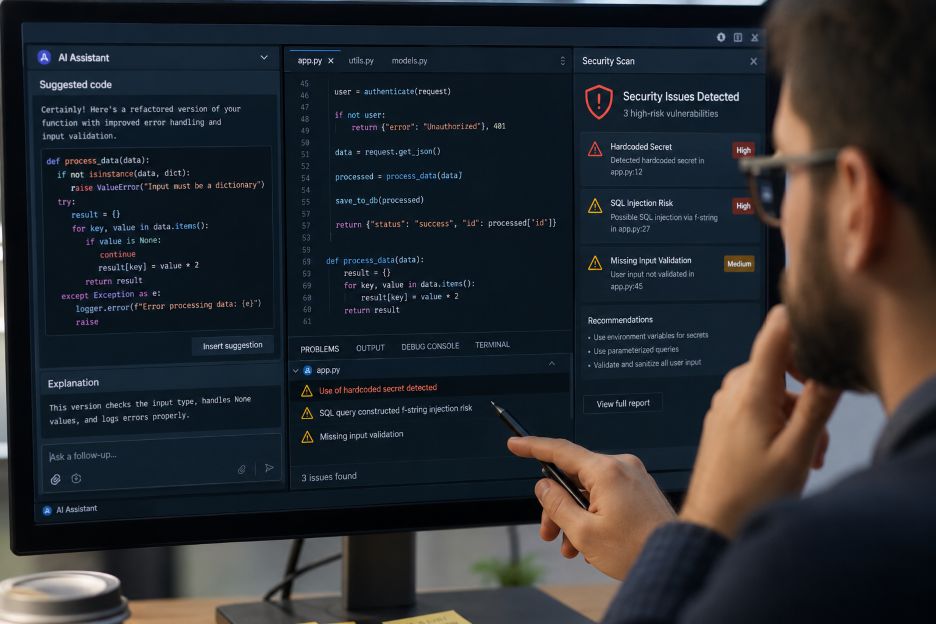
 Every piece of software is built through lines of code written by developers. These lines tell the program what to do, when to do it, and how to respond to certain actions. However, even small mistakes in the code can cause major issues. These mistakes are called bugs. A bug can be as simple as a missing character or as big as a logical flaw that crashes an entire system.
 To learn from bots, developers need to understand how they work. Most Reddit upvote bots rely on automating API interactions from multiple accounts. These bots simulate real human behavior, changing IPs, altering timing patterns, and distributing upvotes at realistic intervals. When done well, they can go undetected unless the system is robust enough to flag subtle anomalies.
 League of Legends (LoL) is one of the most popular multiplayer games in the world. But, like any fast-paced competitive game, performance matters. Low FPS (frames per second) and high latency (lag) can cost you kills, objectives, and even matches. That’s where game optimization software comes in. These tools can boost your PC performance, helping you play more smoothly and respond faster in-game. For players looking to climb the ranks without starting from scratch, many choose to buy LoL smurf accounts to skip early grind and jump straight into higher-level gameplay.
 Valve keeps a close eye on questionable behavior. A rapid increase in MMR or unusual login sites could cause them to suspend the account. Trusting the incorrect boosting service has caused many players to lose years of progress.
 SMM panels can automatically track bugs by issuing alarms when new bugs are discovered or when old bugs are updated, guaranteeing timely attention to important problems.
 Regular releases of patches and upgrades to resolve discovered code flaws and vulnerabilities help developers fight these hacks. This procedure guarantees that fresh updates do not bring new problems using exhaustive testing and debugging.
 Digital marketing has become a core driver for business growth worldwide. Effective marketing channels have opened doors for businesses, from reaching customers through targeted ads to building brand communities. Software code bugs, conversely, present constant challenges in achieving seamless digital interactions, often disrupting a user’s experience and eroding trust in a brand. Combining knowledge of digital marketing and technical debugging skills is essential for marketers, developers, and business owners alike.
 Using inexpensive follower services can disclose security flaws in your account. These services’ tools might have flaws, compromising your account’s security. Unauthorized access, data leaks, and possibly account suspension by Instagram can follow from this.
 Strict testing and debugging are among the best strategies available to stop code errors. This entails running several tests to find possible problems and applying debugging tools to resolve them. Automated testing instruments can help to simplify this process and enable easier problem discovery before they impact your site.
 Towing companies
  Increased Productivity: Word and Excel, among others, benefit from smarter automation and efficiency-boosting technologies. Virtual meetings, IM, and file sharing are all made easier with the integration with Microsoft Teams.
 Temporary Internet Files
 A perk of owning voting shares is the ability to vote on issues of corporate policy. The common stock of a company typically represents voting shares. Preferred stock is one type of share that does not necessarily grant the holder the power to vote.